.jpeg)
Elspeth Crawford's Fundraiser
Help provide hair-saving options for chemo patients who need financial assistance
Join me in ending chemo-induced hair loss, please give today.

Martha Nichols
I donated in support of this campaign.
$100
A supporter of Elspeth Crawford
"For a sense of normalcy "
-
Vishal Gupta
I donated in support of this campaign.
$150
-
Amy Sugarman
"Thinking of you and sending lots of love, strength, and positive vibes."
-
Sara Schaumburg
"Beautiful idea…thanks for doing it "
$100

Center for Motivation and Change
"Carrie, Jeff, and your CMC family continue to send you love and strength, and are proud to support this wonderful campaign you've created."
$2,500
-
Gail Hart
I donated in support of this campaign.
$100
-
Donna Lempit
"You are an angel for helping others while fighting your own battle! May the love and support you’re receiving lift you up and warm your heart! "
$100
-
Elizabeth Murray
"Going for a rounder number to keep it going! "
$78
-
Alison Kumro
I donated in support of this campaign.
A supporter of Elspeth Crawford
I donated in support of this campaign.
-
Nicole Kosanke
"What a fierce and fabulous effort - Go Elspeth!!"
-
Cathie Sekendur
"This is in honor of Elspeth, Elizabeth Murray's daughter. It's not much but I want to show my support."
$25
-
Nydia Sena
"Stay strong Elspeth. Philip & Nydia Sena"
$100
-
Francine Jaume
"I hope this small gesture helps in some way. You’re in my thoughts, and I’m wishing you strength, comfort, and healing 💛"
$100
-
Lisa Jaume
I donated in support of this campaign.
$100
-
Nicole Davis
I donated in support of this campaign.
$150
-
Lindsey Lopez
"We are thinking of you love, the Lopez family "
$100
-
Lauren Conklin
"We are proud to support you, your journey, and the lives of others you are impacting."
$100
-
Michelle Proujansky
"Wishing you health and happiness Elspeth! Fuck cancer!"
$100
-
Ksenia Rudenok
"Wishing you all the strength, Elspeth 🙏"
$50
-
David Thau
"Thank you for using your experience to raise funds and awareness for good!"
$250
-
Samantha Pearlman
"Love you. Leave it to you to take care of others in this moment. Fuck cancer. "
-
Max Dworin
I donated in support of this campaign.
-
Jeanne Kempton
I donated in support of this campaign.
$50
-
Luke Hermann
"So happy to be able to support. "
$100
-
Toni Pryor Leavitt
"Go Elspeth Go!"
$50
-
Christian M
I donated in support of this campaign.
$50
-
Susan Pettig
I donated in support of this campaign.
$50
-
Stephen Colen
I donated in support of this campaign.
$100
-
Christine Binder
I donated in support of this campaign.
$100
-
Alexandra Milburn
"❤️❤️❤️❤️❤️❤️"
When I was diagnosed with cancer on January 21, my world shifted. Like anyone facing this reality, my first thoughts weren’t about my hair—they were about staying alive for my children.
And while that remains true, as I began chemotherapy I quickly realized that some of the “smaller” parts of a cancer diagnosis also carry enormous weight.
Hair loss is one of the most visible and emotionally difficult side effects of chemo. When you already feel vulnerable—like cancer defines your every moment—losing your hair makes that experience immediately visible to everyone around you.
“Cold capping” is a treatment that can help prevent hair loss by limiting how much chemotherapy reaches the hair follicles. It is, quite frankly, excruciating (your scalp needs to remain between 18 and 22 degrees celsius), time-intensive, and it doesn’t save 100% of your hair (you’ll notice my growing baseball cap collection…). For many, those tradeoffs mean it simply isn’t worth it.
But for others who want the option, the barrier is cost. With a price tag of around $2,500, many patients are unable to pursue cold capping at all. As one New York Times article (https://www.nytimes.com/2017/02/14/well/live/scalp...) put it: “It’s not right to have someone sitting in an infusion center with a cap and someone next to them not able to put a cap on — that’s an uneven playing field.”
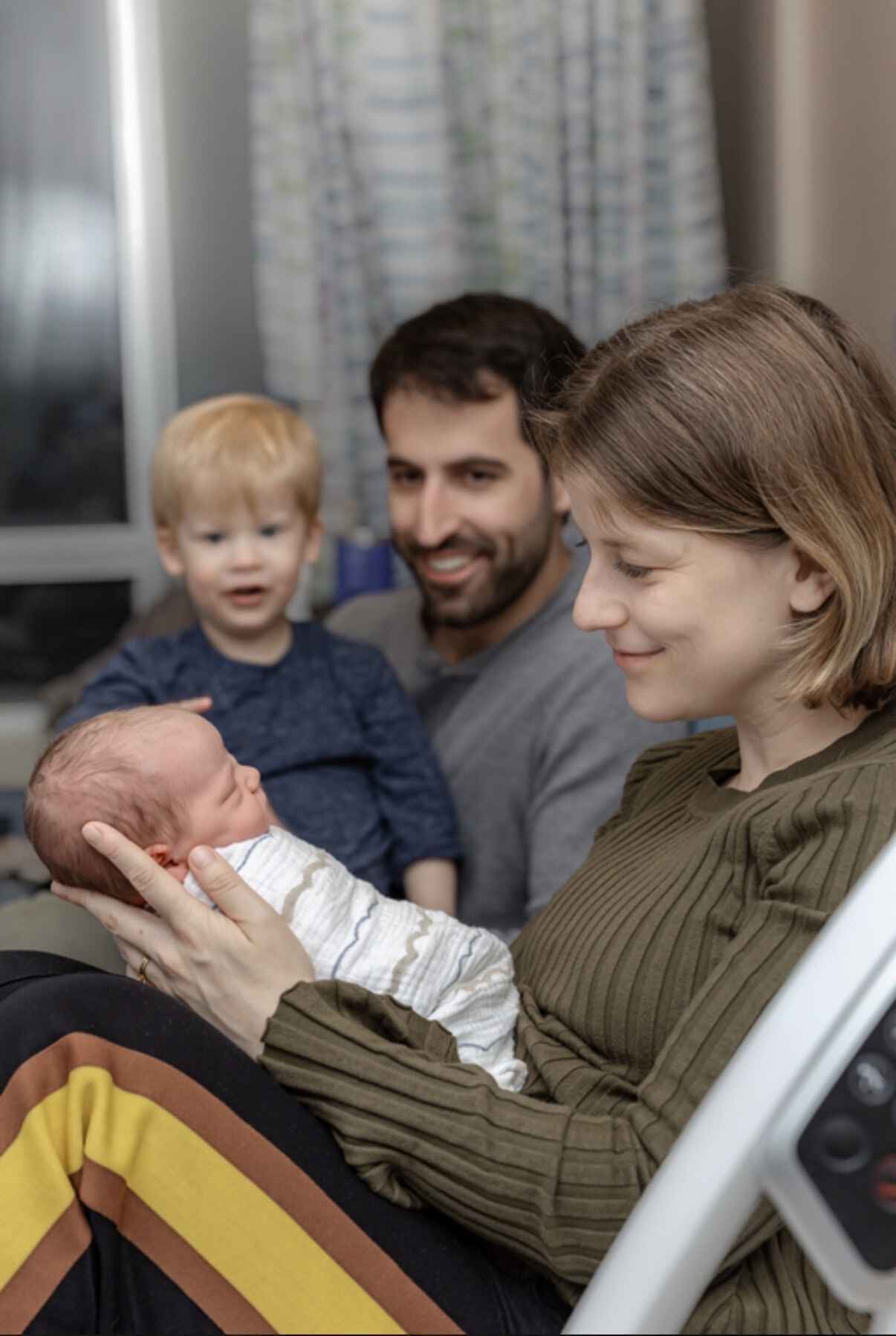
At 33 weeks pregnant and with a young toddler, I chose to cold cap so that Louise could have newborn photos where her mom didn't look sick, and so that Clay could continue self-soothing by twirling my hair in his fingers while we read. Because of these continued moments of "normalcy," I’ve been able to hold onto something that feels deeply grounding in a time that otherwise feels anything but, and I firmly believe that this option should be available to anyone who wants it.
While hair loss is not the most important part of a cancer diagnosis, it is a daily, visible reminder of it. And for many patients, being able to blend in—to go to the grocery store, pick up their children, or look in the mirror and still recognize themselves—can be profoundly stabilizing during an otherwise isolating experience.
Our goal is simple: to make this option available to more patients, regardless of their financial situation. Until insurance companies start covering this important therapy (Bruce made me take out a few expletives about insurance in the original draft), I hope to help bridge this barrier with this fundraiser.